The Longaevi of the Middle Ages were what we call elves, sprites, fairies. Creatures that were not of this world yet not of the heavens. Some regarded the elves as the third of the Angels that did not rebel but did not side with God and thus were thrust from Heaven. They would not go to hell but would face Judgement Day.
Others that they were something higher than man but less than God or even a separate creation all together. Children of Lilith or the dirty children of Eve that she hid from God when he came to inspect them.
Whatever they were they were much more feared part of life in earlier times. Beowulf speaks of Elves and Giants and Orcneas (orcs). While elves, and giants are pretty standard in the way that we think of them the orcs were a different critter altogether. They were more like undead vampires living in the corpses of drowned men.
The Norse spread their ideas of the elves throughout wherever they settled or raided and those ideas mixed with indigenous ideas and concepts of the fairy realm. These longaevi or 'long lived' have a corollary in every in every culture I know of. Every culture I am aware of or studied has their own equivalent of elves, giants, fae, etc.
What should they be in roleplaying games?
First, I don't think that unless you are playing a Tolkien inspired game your elves should be Tolkien's elves. Not that I do not love Tolkien's elves. They are the finest in all literature but they are not elves. Not elves in the sense of Ljósálfar or Dökkálfar or the nisse of the Norse. Tolkien's elves are prelapsarian man before the fall of Adam. They are so not elves that 'high men' are often mistaken for elves. Elves aren't recognized by their donkey ears but by the light in their eyes and the ring in their voices. They are so shining with the Holy Spirit that the most powerful can drive away the Nazgul by their mere presence or face Balrogs of Morgoth down in battle.
Tolkien elves, cool as heck, something to look up to, powerful and strong physically, mentally and spiritually but not fairy. Not elves as we mean in D&D or any other OSR. Tolkien games excepted.
Next in literature we come to the quintessential D&D elf. Poul Anderson's elves from 'The Broken Sword'. These are soulless creatures that other than stature look exactly like the elves in D&D. Pointy donkey ears, strange eyes, long lived but amoral interested in magic and power rather than living a life in tune with God's plan. Imric the Elfking from The Broken Sword is what a player character elf could wind up like if he lived long enough and adventured hard enough.
Cooler than that is Anderson's take on mythology. And boy did he know his mythology. He accepted everything and the kitchen sink as 'real'. Not only are the Elves of England and the Alfar of Norse real but the Elves of France, the Tuatha Dé Danann of Ireland etc. The plot is rich and powerful and the elves are different, unique, utterly divorced from human thought but still deeply desiring human children. The magics they work are foul, and beautiful and amazing and they are as 'cruel as cats' but still powerfully interesting protagonists.
I had a long conversation about this book with him thirty some years ago mostly because I am really as big as my namesake and I looked like a viking biker. Nobody was moving me from the line until I was done talking.
There was some other guy there, S.M. Stirling or something like that. I think he wrote a couple books after that. I spent a long time talking to him as well and it was worth it. He knew what I would like just by talking to me about what I liked with Anderson's work.
Anyway my take away on Anderson's work is that for any dungeon master you can find a type or types of elves that fit with your game system. If you want elves that are not just pointy eared hippies, you need some meat and bones behind them. You need to build the folklore and myth into something that is different and spooky.
One of the things that D&D did was remove one of the more common skin colors for critters for fae, green. Green used to be a fairly common skin color in folk lore.

Elves are a part of human history for as long as we can remember. We have several ideas about them and several different takes on them some games embrace that. When I play Dungeon World I encourage my 'elf' players to tell me what makes them 'elves'. In my games every kind of elf is possible from the pointy eared Imric the Elfking types to the human looking Tuatha Dé Danann. Mechanics might be the same for the game (or might not) but I want to know what their vision of what an elf is.
If they say, "D&D elf" great. It is a standard trope with a long history that everyone knows what they mean. If they tell me they want to play something like a Icelandic elf or a Ljósálfar or Dökkálfar, fantastic. There is something new to explore. If they say they have pointy ears, cool, round ears, cool, green hair, skin, etc all cool. No matter what they want to play or how they want to play it. It's all good.
For dungeon masters in other systems what does this mean? Well if your game is not flexible, not much. You get a little of the background of some of your fantasy races but you could get as much reading C.S. Lewis or even the wikipedia. For DMs with more flexible systems or who want to make their own PC or NPC races. You should have a better idea of the variety of elves, fae, fee, alfar etc out there. With a little retooling many creatures like huldra folk can make interesting elves even dark elves.
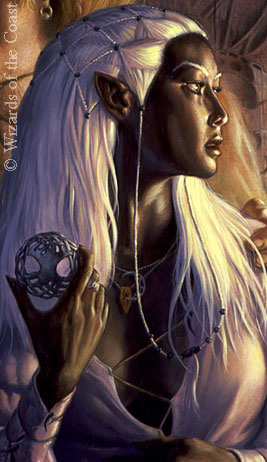
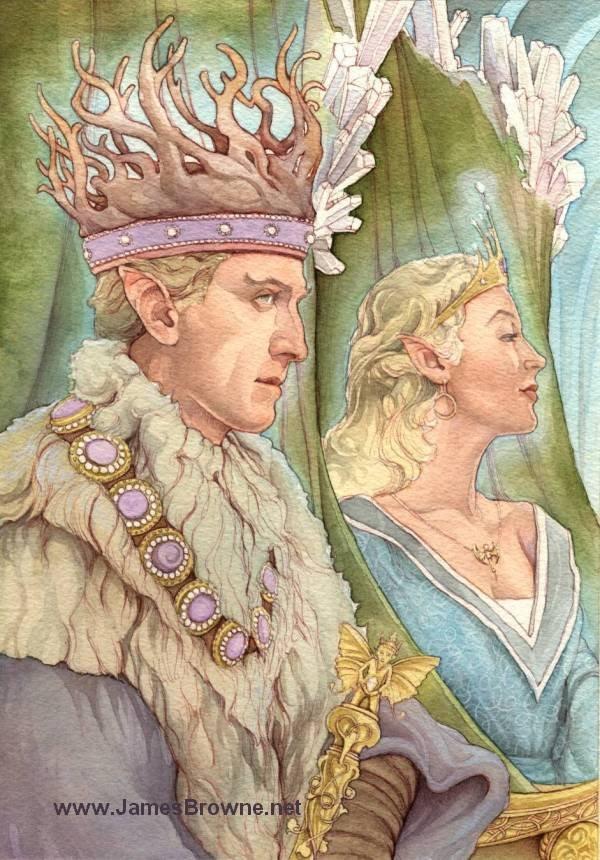
Norse separate elves into light and dark. Do they have pointy ears? That's up to the DM. Norse light elves live in a realm not far from the gods and are 'as fair as the sun' to look upon. Dark elves live deep underground and are as 'black as pitch'. How you fit your elves into your games is up to you and your player. Just be aware that the original elves were dangerous, magical, different, and inhuman, just the way a player character or non-player character race ought to be.
If you like what you read let me know in the comments.
The pictures and images are the sole property of whomever owns them I make no claim on the images nor intend any infringement of copyright.

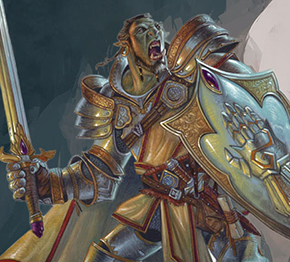 This is a tank, also called a brick or a meat-shield. Tanks can be build around any big, tough, heavy armor using class. They also generally use a shield but if they are badass enough or just don't care about getting hit personally, they can forgo the 'sword and board' for something bigger to whack monsters with.
 This shadowy character here is the thief or rogue. Sometimes called the 'back stabber', 'knife guy', 'trap guy', burglar etc. This lady's relationship to the other characters is at best complicated. She is the high maintenance girl that is particular about everything. Four hours to get ready for a dinner date? Standard for the thief. A place for everything and everything in its place and she's going to make sure it's just what it appears to be.
 This is your standard issue wizard, also called a 'glass cannon', their relationship to everyone else is to keep their behinds, behind. While they can lay down the hurt or put the enemy to sleep at lower levels that's about it. One or two spells a day a couple cantrips and 'get your behind to the rear'. They are neither very tough nor very hard to hit hence the 'glass' part of 'glass cannon'.
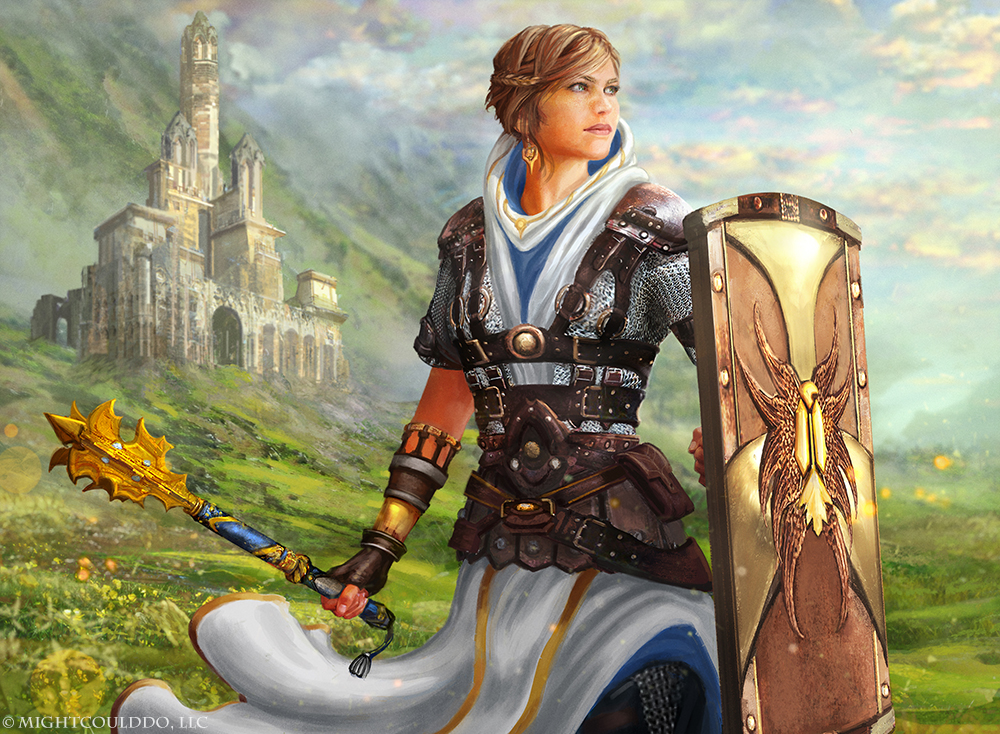 Here is the cleric. She is the last person picked for everything. Each player at the table is hoping someone else will play the cleric. Everybody. Especially the player who usually plays the cleric. She's the one that wants to fix everyone. Doesn't matter who you are in the party she's taken it upon herself to not only stand there in her armor between you and danger but to put down her mace, flail, club or other blunt instrument to heal you when you need it.
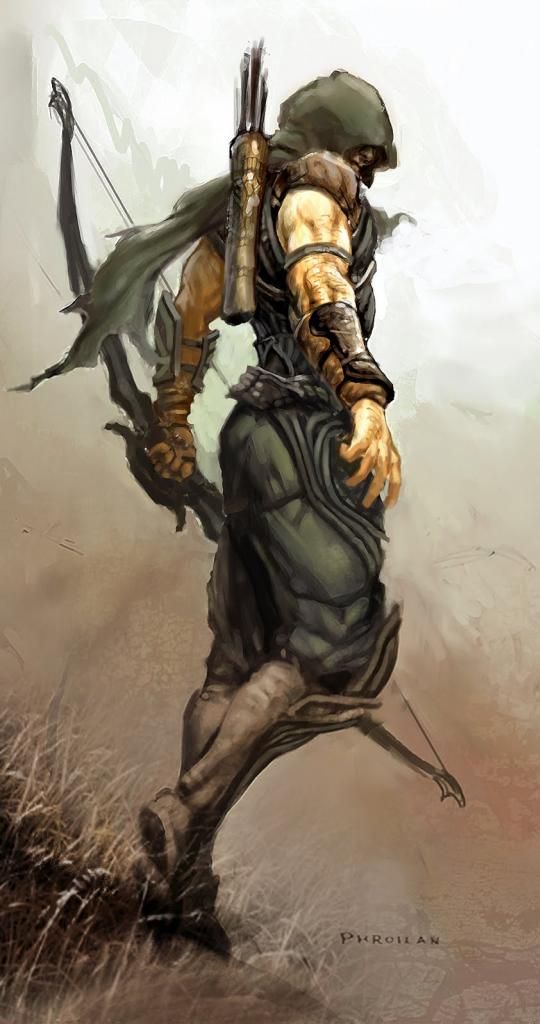 This is a ranger. He's the bow and arrow guy or elf. Sometimes half elf. Depends on the system. What you need to know is that he's like Aragorn with a little Robin Hood thrown in. Now some of your newfangled rangers have 'animal companions'. This is not a true ranger. No, a ranger puts arrows into stuff and tracks, he can cast a few spells now and then but his main job is to move quietly in the wilderness, scout, track (again in the wilderness) and shoot arrows. He's supposed to shoot lots of arrows because you need a distance weapon after your magic user uses his sleep and magic missile spell.

 This first guy is a personal favorite. The Jersey Devil is all American Folklore. You just don't get any more authentic scarey goodness. Allegedly the thirteenth offspring of the 'Witch' Leeds and Satan as a father the little tyke was born sometime around 1735. After his blessed arrival he immediately turned into the "Jersey Devil". The Jersey Devil apparently sprang into being full sized with a goat head, bat wings, horse's hooves, and a bifurcated tail.
  This is the Beast of Bray Road. It is a recent cryptid first mentioned in the 1930's. This guy is like a transformed werewolf or werebear that is three or four feet tall on all fours but can be bipedal and stands over seven feet tall. This creature attacks vehicles and is spotted eating roadkill in Wisconsin. Since the name Bray Road just sounds spooky go ahead and keep it for your 'Beast'. Game wise I shouldn't have to hold your hand with a big werewolf looking critter. Since it appeared in the thirties I am going with a government breeding experiment gone wrong. Fantasy games would be an alchemists or necromancer's experiment. Anyway it haunts the roads because it cannot hunt well and it is used to being fed by humans. If you toss food from the wagon/cart it will stop to eat it. It only becomes really dangerous if you try to take it's prey from it.
 The Mothman is more complex. He was first spotted in Point Pleasant West Virginia. Point Pleasant is the kind of name that can translate into nearly any setting. Now to our critter. The Mothman is said to be large as a man with white wings and brilliant red eyes. Some describe it as owl-like others well as moth-like hence the name.
 Okay, we can be certain of two things about this sword. It is not the original sword that was carried by Tristan or Ogier the Dane. Two it is part of the Royal Regalia of the English monarchy. For some reason for the first few hundred years they used this sword they simply remade another one. Can't see the reasoning behind that but there you go.
 Now this is not the actual Oliphant used by Roland but his probably looked something like this. These horns made from elephant tusks were popular in Europe for quite a while. The Horn of Gondor was probably influenced by the original Oliphant. It is said that if you ever blow this horn it will be heard by your allies. So maybe if they are close enough you could get some serious back up. If not you can wind up like Roland or Boromir.
 This is the Conyers Falchion. In legend and folklore this big bad chopper shortened a dragon. The sword is at a minimum seven hundred years old. Definitely a relic and not rubbish. In game terms I shouldn't even need to cover this one. It is a dragon killing sword. It also confers legitimacy in the eyes of the Crown and Church to the individual possessing it.
 There's not much left of this cup. For centuries pilgrims would come from far and wide to drink from this cup and be healed. But people being greedy would take a tiny bite from the cup because, 'who would miss just a sliver'? So now no one gets to drink from it. Way to go you sick, greedy losers. Anyway, this cup was actually stolen and recovered by the police in a neutral exchange.
 This is was the royal battle standard of France and kept at the Abbey of St Denis when not being carried into battle. It was displayed when there was no quarter to be given. The bearer of the standard was granted a great honor one he was expected to die for rather than allow the standard to fall or fall into enemy hands (the Oriflamme was lost five times). It was said to be red as it had been dipped in the blood of St Denis when he was beheaded. In game terms this standard must be borne by a Lawful Good fighter paladin etc. He must be noble true and worthy, willing to die rather than disgrace his standard or his liege. The bearer of this standard grants morale, stamina, and strength bonuses for all allies on the field. Losing it doubles those bonuses as penalties. Don't drop it. It can be fitted to a spear or lance and unfurled once a day.