Showing posts with label Fantasy races. Show all posts

Wednesday, June 15, 2016

Elves, What are They?

Note: This post is inspired by a Jeffro Johnson G+ posting which is a link to another blog about the least interesting of elves, the drow. 

The Longaevi of the Middle Ages were what we call elves, sprites, fairies. Creatures that were not of this world yet not of the heavens. Some regarded the elves as the third of the Angels that did not rebel but did not side with God and thus were thrust from Heaven. They would not go to hell but would face Judgement Day.

Others that they were something higher than man but less than God or even a separate creation all together. Children of Lilith or the dirty children of Eve that she hid from God when he came to inspect them.

Whatever they were they were much more feared part of life in earlier times. Beowulf speaks of Elves and Giants and Orcneas (orcs). While elves, and giants are pretty standard in the way that we think of them the orcs were a different critter altogether. They were more like undead vampires living in the corpses of drowned men.

The Norse spread their ideas of the elves throughout wherever they settled or raided and those ideas mixed with indigenous ideas and concepts of the fairy realm. These longaevi or 'long lived' have a corollary in every in every culture I know of. Every culture I am aware of or studied has their own equivalent of elves, giants, fae, etc.

What should they be in roleplaying games?

First, I don't think that unless you are playing a Tolkien inspired game your elves should be Tolkien's elves. Not that I do not love Tolkien's elves. They are the finest in all literature but they are not elves. Not elves in the sense of Ljósálfar or Dökkálfar or the nisse of the Norse. Tolkien's elves are prelapsarian man before the fall of Adam. They are so not elves that 'high men' are often mistaken for elves. Elves aren't recognized by their donkey ears but by the light in their eyes and the ring in their voices. They are so shining with the Holy Spirit that the most powerful can drive away the Nazgul by their mere presence or face Balrogs of Morgoth down in battle.

Tolkien elves, cool as heck, something to look up to, powerful and strong physically, mentally and spiritually but not fairy. Not elves as we mean in D&D or any other OSR. Tolkien games excepted.

Next in literature we come to the quintessential D&D elf. Poul Anderson's elves from 'The Broken Sword'. These are soulless creatures that other than stature look exactly like the elves in D&D. Pointy donkey ears, strange eyes, long lived but amoral interested in magic and power rather than living a life in tune with God's plan. Imric the Elfking from The Broken Sword is what a player character elf could wind up like if he lived long enough and adventured hard enough.

Cooler than that is Anderson's take on mythology. And boy did he know his mythology. He accepted everything and the kitchen sink as 'real'. Not only are the Elves of England and the Alfar of Norse real but the Elves of France, the Tuatha Dé Danann of Ireland etc. The plot is rich and powerful and the elves are different, unique, utterly divorced from human thought but still deeply desiring human children. The magics they work are foul, and beautiful and amazing and they are as 'cruel as cats' but still powerfully interesting protagonists.

I had a long conversation about this book with him thirty some years ago mostly because I am really as big as my namesake and I looked like a viking biker. Nobody was moving me from the line until I was done talking.

There was some other guy there, S.M. Stirling or something like that. I think he wrote a couple books after that. I spent a long time talking to him as well and it was worth it. He knew what I would like just by talking to me about what I liked with Anderson's work.

Anyway my take away on Anderson's work is that for any dungeon master you can find a type or types of elves that fit with your game system. If you want elves that are not just pointy eared hippies, you need some meat and bones behind them. You need to build the folklore and myth into something that is different and spooky.

One of the things that D&D did was remove one of the more common skin colors for critters for fae, green. Green used to be a fairly common skin color in folk lore.

Elves are a part of human history for as long as we can remember. We have several ideas about them and several different takes on them some games embrace that. When I play Dungeon World I encourage my 'elf' players to tell me what makes them 'elves'. In my games every kind of elf is possible from the pointy eared Imric the Elfking types to the human looking Tuatha Dé Danann. Mechanics might be the same for the game (or might not) but I want to know what their vision of what an elf is.

If they say, "D&D elf" great. It is a standard trope with a long history that everyone knows what they mean. If they tell me they want to play something like a Icelandic elf or a Ljósálfar or Dökkálfar, fantastic. There is something new to explore. If they say they have pointy ears, cool, round ears, cool, green hair, skin, etc all cool. No matter what they want to play or how they want to play it. It's all good.

For dungeon masters in other systems what does this mean? Well if your game is not flexible, not much. You get a little of the background of some of your fantasy races but you could get as much reading C.S. Lewis or even the wikipedia. For DMs with more flexible systems or who want to make their own PC or NPC races. You should have a better idea of the variety of elves, fae, fee, alfar etc out there. With a little retooling many creatures like huldra folk can make interesting elves even dark elves.
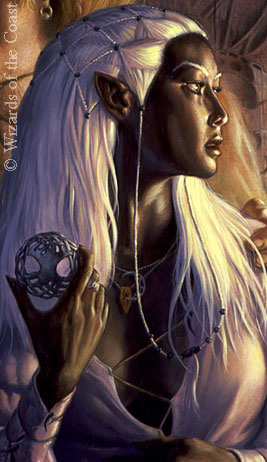
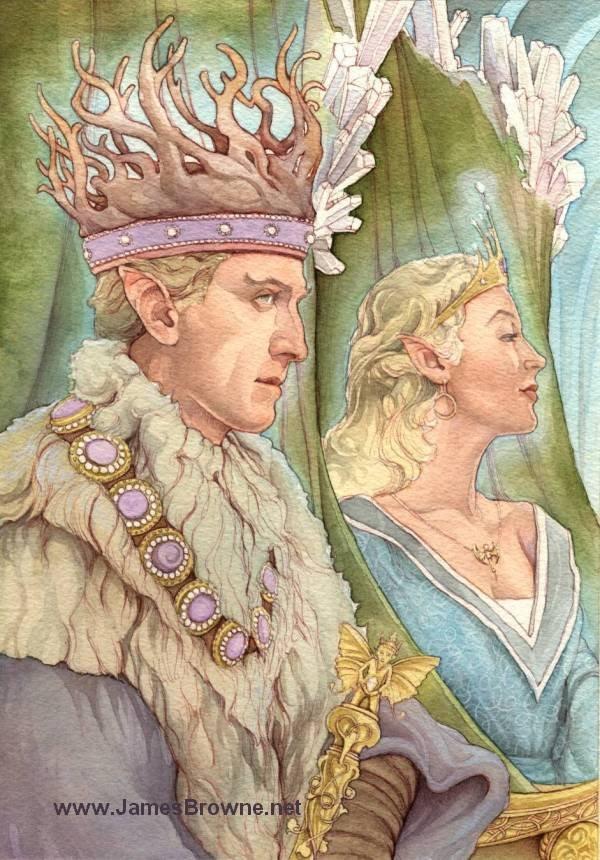
Norse separate elves into light and dark. Do they have pointy ears? That's up to the DM. Norse light elves live in a realm not far from the gods and are 'as fair as the sun' to look upon. Dark elves live deep underground and are as 'black as pitch'. How you fit your elves into your games is up to you and your player. Just be aware that the original elves were dangerous, magical, different, and inhuman, just the way a player character or non-player character race ought to be.

If you like what you read let me know in the comments.
The pictures and images are the sole property of whomever owns them I make no claim on the images nor intend any infringement of copyright. 

Monday, June 13, 2016

New Races Inspired by American Folklore

When I say 'America' I mean all of America from Tierra del Fuego to the Arctic Circle. These are non-player character or player character depending on your take on the legend and creature involved. Remember this is a player character interpretation. They may also appear later as a monster. We'll focus on one per posting.
 Patterson–Gimlin film frame 352.jpg
By Patterson-Gimlin film, Fair use, https://en.wikipedia.org/w/index.php?curid=434396

The first is my own namesake the mighty Rainforest Giant or Sasquatch. Sasquatch while being mostly a large animal-type critter for modern folks. For Native Americans and a few Europeans Sasquatch is more of a 'person' in folklore.

We'll just keep with Sasquatch as his racial name, bigfoot is too cartoony and Big Figure is a specific tribal tradition.


Sasquatch
They are seven or eight foot tall hairy humanoids with long arms and legs and both sexes have a peaked head due to the jaw muscles in adulthood. Their feet are incredibly tough with thick leathery soles they can go anywhere a shod person can go.

They are immune to the extremes of weather found from the high basin desert to the coastal rainforest and north into the arctic the Sasquatch needs no clothing. Although in some areas they wear a loincloth of some kind they are particularly adept at weaving, especially plant matter. 

Despite their size they are incredibly good at stealth based skills. Sasquatch suffer no penalties for moving in rough terrain and can do so silently.

They are rare nearly everywhere live entirely solitary lives from other Sasquatch except for mating and mothers with their children. They normally avoid cities and prefer the wilderness or small communities. They avoid using metal tools and weapons and prefer wood, leather, bone, and other organic matter for weapons and tools.

Sasquatch receive a bonus in strength and constitution. They suffer a penalty to intelligence and charisma. A bonus to lifting strength, carrying capacity, or encumbrance is also appropriate. They receive a bonus to whatever stealth is used in your system. They can hide perfectly once per day or walk without leaving a trace once per day. Otherwise their rather distinctive footprints are easier for any tracking class to follow. Classes appropriate to the Sasquatch include thief, assassin, and fighter. Also cleric and druid should be considered due to their association with magic.

Their own language cannot be spoken by outsiders but wilderness types, Rangers, Druids, Shadow Wardens, etc can select the Sasquatch language for understanding but not speaking. They may also find using non-giant sized tools, armor and weapons difficult or impossible. They can understand most human languages however can only speak them in a rudimentary manner.

Socially they should be considered outcasts nearly everywhere. Alignment is any non-lawful. Now to a rather delicate subject. According to some Native American traditions and folklore they can and do sometimes have children with humans.

Half-Sasquatch look more like their human parents. With only their burly build and perhaps height showing signs of their Sasquatch heritage.

Bonuses include greater strength and constitution perhaps half of the Sasquatch, lower intelligence and charisma (perhaps either a cap on the stat or a half of the Sasquatch penalty). They should receive a bonus on stealth but not the perfect stealth or unseen passage ability. Half-Sasquatch can speak the Sasquatch language without penalty.

Classes appropriate for Half Sasquatch are Barbarian, Fighter, Thief, Ranger, Cleric, and Druid. Alignments can be any.

If you like this let me know. I left the mechanics open ended so that they can be adjusted for your game and setting. Please leave me a comment, I want to know what you think of my might people.

Note: The pictures are not my own and I make no claim upon them in anyway whatsoever. 

Friday, June 10, 2016

Mythology Folkore and Characters from America

I've learned over the years that not all characters and monsters from folklore and myth are created equal. Darn few aren't suitable for some kind of roleplaying game treatment.

Any game could use the little Cotswold Fairies, the Loch Ness Monster, Nisse, Trolls, Huldra folk, the Beast of Bray road or the 'Look Behind' are all good grist for our mill. So lets take a look at a few and how they fit into a roleplaying game campaign.

Note, I am ruthlessly ignoring any published 'facts' known about any of these critters, just the folklore and how they fit in the games.

The Jersey Devil
This first guy  is a personal favorite. The Jersey Devil is all American Folklore. You just don't get any more authentic scarey goodness. Allegedly the thirteenth offspring of the 'Witch' Leeds and Satan as a father the little tyke was born sometime around 1735.  After his blessed arrival he immediately turned into the "Jersey Devil". The Jersey Devil apparently sprang into being full sized with a goat head, bat wings, horse's hooves, and a bifurcated tail.

The Jersey Devil took one look at the inside of his mother's crowded, filthy, cabin in the woods and his twelve siblings and with a growl and a shriek killed the midwife flying out the chimney and heading for the Barrens.

In gaming terms he's a pretty versatile monster. He could be a seriously grim portent in Dungeon World. Deal with him (usually through some kind of exorcism ritual) or be ready for some serious cursing. He could be any other monster although with his unique heritage you should thinking of something bigger. He flies, kills his own midwife and makes a terrible shriek. What's not to like.

Sticking with the American theme we're going to look at something near and dear to my heart, Daskiya Woman (pronounced Dusk-ee-yah Woman). I don't have a good picture handy but this one will freeze your bones.

She is a figure in the Quileute culture on the coast of Washington. According to local folklore she lives down Thunder Road (a now gated road that leads into the Olympic National Park). Daskiya Woman is a nasty cannibal who prefers children. She carries a woven basket on her back and has long tangled gray hair (I have been accused of having hair like Daskiya Woman on occasion however, Mrs Giant assures me it is more 'Krusty the Klown'). She will snatch bad children that stay out after dark put pitch in their eyes to blind them and cook and eat them. She is strong, silent, and never seen unless you're on the menu.

Even twenty years ago you'd see kids come inside when mom called that 'Daskiya Woman will get you!', I am not sure if that is still the case. So while she's folklore she's still very much alive in belief. In game terms well she can fit nearly any ogreish child snatching type. She comes out at night is big strong and scary. Her basket will hold a child (or two) and muffle their cries for help. The only way to get the pitch out of your eyes is to heat up your hands by a fire. Since most games are not set in La Push, a GM should have a suitable place where she is said to live. You probably can't beat a real place under dark evergreens called Thunder Road.

Since I love the Quileutes and many have shared their stories I'll give you one more from the real Quileute Nation. This is a smaller creature than the Daskiya Woman. This is the Stick Indian. I do not know the native name for them (there are many) as the Native Americans do not like to attract their attention. Stick Indians (according to the Quileutes) are small unobtrusive people that cannot speak a real language but communicate in whistles and such. They claim food between the tide line and the end of the driftwood that fronts the beach and if you whistle you will attract their attention. If you whistle with food they will assume it is for them.

They defend themselves with thrown stones and have been known to try to lure children into the woods while berry picking. In game terms they are small fae like people, difficult or impossible to spot unless they want you to see them. One person described them as having yellow skin and black hair but that was the only physical description I heard of them except for their short stature. They can throw stones and whistle to lure people into the woods. So they could be wandering monsters in a forest or beach type environment.

Now we return to more frightening creatures or creature the Beast of Bray Road.
http://vignette3.wikia.nocookie.net/itsmth/images/f/f2/368px-Beast-of-bray-rd.jpg/revision/latest?cb=20140726181150This is the Beast of Bray Road. It is a recent cryptid first mentioned in the 1930's. This guy is like a transformed werewolf or werebear that is three or four feet tall on all fours but can be bipedal and stands over seven feet tall. This creature attacks vehicles and is spotted eating roadkill in Wisconsin. Since the name Bray Road just sounds spooky go ahead and keep it for your 'Beast'. Game wise I shouldn't have to hold your hand with a big werewolf looking critter. Since it appeared in the thirties I am going with a government breeding experiment gone wrong. Fantasy games would be an alchemists or necromancer's experiment. Anyway it haunts the roads because it cannot hunt well and it is used to being fed by humans. If you toss food from the wagon/cart it will stop to eat it. It only becomes really dangerous if you try to take it's prey from it.

The Mothman

http://img.photobucket.com/albums/v336/Shiiya/EF-MM-1.pngThe Mothman is more complex. He was first spotted in Point Pleasant West Virginia. Point Pleasant is the kind of name that can translate into nearly any setting. Now to our critter. The Mothman is said to be large as a man with white wings and brilliant red eyes. Some describe it as owl-like others well as moth-like hence the name.

This is a creature that is spotted before a disaster occurs. It also is associated with the men in black phenomenon. That could work in a fantasy campaign as agents of a dark necromancer, the operatives of the Emperor, or even men from another dimension who record the terrible events that the Mothman heralds. It could be a cause of the terrible events or a warning. It is also known to occasionally attack kids in their cars this could translate to attacking any travelers after dark. The Mothman itself? A minor demon, a portent of worse things to come? Some kind of psychic vampire that feeds off the negative energy and fear.

I was deliberately vague about the mechanical effects for most of these critters so that GMs could fit them into their own worlds. If you enjoyed the article or hated it let me know. There's lots of more American creatures, people, and monsters to cover that fit into fantasy campaigns. I forgot to add this will be a regular feature until I run out of critters from the Americas and will then move on to creatures from anywhere that takes my fancy.

Wednesday, June 8, 2016

Which Setting Would Like to Play In?

Okay, I have a couple of questions for all you readers. Which kind of setting for a pencil and paper fantasy game would you rather play in and GM?

Setting one an Arthurian era setting before the sinking of Lyonesse and Hybrasil. Something like the Lyonesse stories and Arthurian legends.

Setting two a fantasy setting in an altered North America set after a couple of thousands of years of migration from Europe and North Africa.

Both have fantasy, swords and sorcery and derring-do.

Question Two would you rather play a fantasy skill based game, class based game with levels, or a combination of the two.

Please leave answers in the comments. If you think of some options I've missed for game type go ahead and make recommendations.

Sunday, June 5, 2016

Sex and D&D

Okay, I know this has been done before. Phil and Dixie did a 'strip tease' for many issues before they actually never covered the topic until years later. And not in the Dragon.

However, I am not doing that so let's just let that go. I am talking about the massive sexual dimorphism between human men and women and how it relates to gaming especially in the early years. So if you are offended by the natural differences between people stop reading. If you are intrigued or bored and willing to read for a couple minutes stick around.

In the beginning, shortly after the Great Flood and before the A-Team man made roleplaying games and made the first player type characters and saw that it was good. Being that this was before Buffy the Vampire Slayer or second wave feminism women were not allowed to play.

No wait, that's entirely wrong. Women were allowed to play and for many male players the only female contact they had that was not deliberately making their lives hell at school or related to them or both (sisters and cousins can be mean). The games themselves were rooted in the war game tradition that came before and the fiction of the time. In that benighted era nobody knew that everyone was identical there were differences in the capabilities of the different sexes.

In general male player characters could be stronger than women. And this was wrong. They got it wrong but probably not for the reason you think.

You see, the players are not 'Joe Average' who just happens to own a sword or a grimoire and a burning desire to run like a lemming into tombs, ruins, and caverns. No, the player characters are the stuff of legends or someday will be. We have weight classes in every sport as well as leagues for both sexes because there are very real differences between the sexes in the real world. However, the games are not the real world!

The games are the stuff of legends, myths, and folklore. Hyppolyta was an Amazon queen that was too much man for anyone but Hercules. The Valkyries were shield maidens as much as they were choosers of the slain. Valeria of the Red Brotherhood feared no man. Bêlit was Queen of the Black Coast. The fiction and legends were replete with women who outmatched, outfought, and faced down any man or monster as long as she had breath in her chest and strength in her arm.

So there was never reason to restrict abilities to those we find in the real world. We're discussing games where people fly with magic potions, fight ghosts and dragons, and commune with beings from other planes. The idea that some characters should be limited is just not fitting for the setting.

If you want to restrict non-player characters based on what humans on Earth can do now, that is a different discussion. Despite Valeria and Bêlit being deadly with a sword, most women are going to fit within the averages that have been with the human race since the paleolithic and that's just that. Again, we are dealing with fiction though so if you want to change that you can. Be aware that your world will change (if you're into world building if you just want a pseudo-medieval world with a modern PC gloss then do what you like without consequences).

I will before moving on briefly touch on how women were depicted pictorially in these games and on their covers. Very, very respectfully for the most part. The little partial nudity (succubus I am looking at you) mainly concerned monsters that were by their natures unclothed. Female warriors, thieves, and magic users were usually as well covered as their male counterparts. How were they posed? Usually in front of the males. Just as you would for a portrait today, you put the shortest guys in front so behind the hobbits but in front of the humans and half orcs. They were posed with sword, wand, or dirk not waiting to be rescued or clutched in the arms of their rescuers. So pretty darn good.  It was later that the chainmail bikini became a thing and you can blame that on later editors and artists. By then the hobby was fully integrated so if you didn't like gaps in women's armor talk to those guys and gals.

That brings us to the second part, how were girls and women players treated in the early days. Now I never once sat at a table where any female player was limited in any of her choices regardless of what the rules said. One, most young boys think of themselves as rebels as well as white knights and two, as I mentioned before these were the first girls who were actually nice to them.

Now I have heard of the mythical table where the boys were so stupid and short sighted they scorned or rebuffed female players. If they existed (and given human mule-headedness I can only assume they did somewhere) I can only say one thing. Suckers! You had girls willing to put up with your pimply teenage self to play a cool game and you blew it. I am laughing at your feeble intellects and feckless social skills. You guys 'rolled a one'.

We did have one player that made a crude joke at a table where we had a few young women just getting their feet wet roleplaying. So many guys verbally bounced him so hard his fragile ego is probably still crawling out of his hole. The joke was forgotten and the young women became regulars. Happy ending all around.

The stories we tell together at these tables should be equal to Tolkien, Howard, Leiber, and Brackett at their best. If you are a space ranger hunting down pirates you should be one of Norton's or Piper's rangers. If you are a brawling warrior bestriding your world like a giant you should be one of Howard's or Kuttner's or Brackett's heroes. If you are a thief slipping through the shadows and whispered about from the Maul to the Suk of the Goldsmiths in Kwarizim, you should be fit for Leiber's or C.L. Moore or Carter's stories.

You don't play great games and tell great stories by limiting your players. You tell great collaborative stories and have great gaming by embracing the fiction and the narrative, being a fan of the characters and a friend to the players.

I forgot to add if you have ever played a game with sex based pc differences let me know in the comments. I'd like to see how your experience went. 

Sorry, no actual sex took place at any time during this blog post. If you are willing to hang around just wait until I get to romance in D&D, it will melt your mail loincloth.

Races and Roleplaying

We started a number of good conversations about roleplaying with our post regarding religion. I decided that we hadn't covered enough controversial subjects therefore we have today's post about races in the roleplaying world.

When we say 'race' we usually mean species. By any biological standards, most elves, dwarves, men, orcs, etc are obviously different species sometimes they are even created by different gods or on different worlds! Now hobbits did start out as a branch of the 'mannish' family according to Tolkien's writing so whether or not they are non-human, human, a subspecies of human or merely another race as fully 'human' as a Spaniard or a Native of Papua New Guinea is not settled. However, I will use the common term 'race' to refer to all different groups.

Different human races, cultures, and ethnic groups can be found in a number of games. Sometimes those groups are pure fantasy, in other games and settings they correspond to real groups. Usually all human groups are treated the same like the old song says, "every Hottentot and every Eskimo" are in the same boat. Same bonuses, same saving throws, for every member of mankind. Other times a group will get a bonus or penalty based on their environment or something special about their physical make up. This usually occurs in games without other fantasy player races.

'Barbarian' groups may receive a bonus for this weapon or that, civilized folk may receive literacy for free for example. A polar dwelling group might receive some cold resistance, desert dwellers heat tolerance and so on.

Mechanically and thematically most non-human races match one of the categories established by D&D. Dwarves dwell under the mountains and are experts with stonework. Elves are pointy-eared goodnatured hippie types with a bow. More recent elves following the fiction of a particular book series may have warpaint, tattoos, body piercings and the like. Hobbits started as 'Hobbits' simply lifted whole cloth from Tolkien's pages. Halflings began to diverge somewhat and after a book series popularized a more chaotic and hyperactive version of the race the Kender have begun to edge into Tolkien's niche.

Elves in D&D and most fantasy games have far more resemblance to the creatures in 'The Broken Sword' than anything Tolkien wrote. Scholars still argue whether or not Tolkien's elves had pointed ears at all. The strongest arguments are for the 'no' category (that is a whole nother blog post).

By the time AD&D rolled around half-orcs had become a player option. D&D had always talked about player character centaurs, samurai, and even dragons. Here though was an official new race that while it fit with the 'Tolkienesque' group of races (it fit Tolkien's conception of a half-orc much more closely than Tolkien's conception of the elf did) it was an antithetical race to most of the other races. Its favored occupations involved death and mayhem. Even its drawing in the D&D player's manual looked chaotic and sinister. 

This occurred at the time that TSR was working to present a single vision of what D&D was. A response to fan produced settings and products, litigation, and hobby growth. They saw what they regarded as their genre going a dozen different directions. TSR became more and more professionally oriented versus the earlier encouragement for fans to produce their own version of fun.

Rules lawyers had been around for as long as there was a hobby but the concept of 'one true game' and 'one true way to play' created the Rules lawyer's natural habitat. They expanded like Cane Toads in Australia. Rules Lawyers were about as toxic and popular as Cane Toads (again another blog post). These tighter rules and their adherents began to shut down some groups' sense of what they could do. It was rules as written time. The various gaming companies expanded official player races. While at the same time solidifying and limiting options.

The limitations were like most, purely in the minds of the players. Of course, they could have ignored the words of Gygax who was as of issue 16 of The Dragon magazine clearly staking his and TSR's claim to the hobby. However, most did not. Rules as written became an actual thing. Amateurs making changes to 'his' hobby were called out if you're not playing by the rules you're not playing D&D.

This began to limit what the races were and meant in the official universe. While those that expanded their Holmes edition might have a satyr or a centaur the official AD&D types were basically sticking with what was offered.

Some games like Dungeon World protect the class niche keeping skills and abilities unique to each class. Some games also protect the race niche. Humans remain the only race for a paladin or monk for example.

For the most part however, the hobby has matured and has split into several camps. These are mostly based on the difficulty and flexibility of the games in question or on a particular approach to the hobby and are not mutually exclusive. Races are no exception. For the most part races have expanded. Even in the deliberately retro OSR community you can find people who play an angelic race or one based on a sentient dinosaur or dragon type.

Which is all to the good. More options in games, play styles, and settings bring more people into the hobby and allow old timers to branch off into a new direction if they like.

So if you've stuck with me this far, how do you or your gaming group treat the different races in your games?

Are you strict rules as written? Are you open to different possibilities? Do you treat them as all equal in the fiction or are some races socially advantaged or disadvantaged in play?

Let me hear what you and your group does in the comments.

And if you think race is a racy topic just wait until I discuss 'Sex in D&D'.
*Note I will ruthlessly spam any comments that are racist towards actual living people or people of the past even if you think you are clever using coded language. There's no place for that here or in our hobby.